
Machine Learning vs. Traditional Software: When Each Makes Sense
Determining when to write deterministic rule-based code vs. training dynamic machine learning probabilistic models for business automation.

Muhammad Javed
Senior Full Stack Developer (AI Domain)
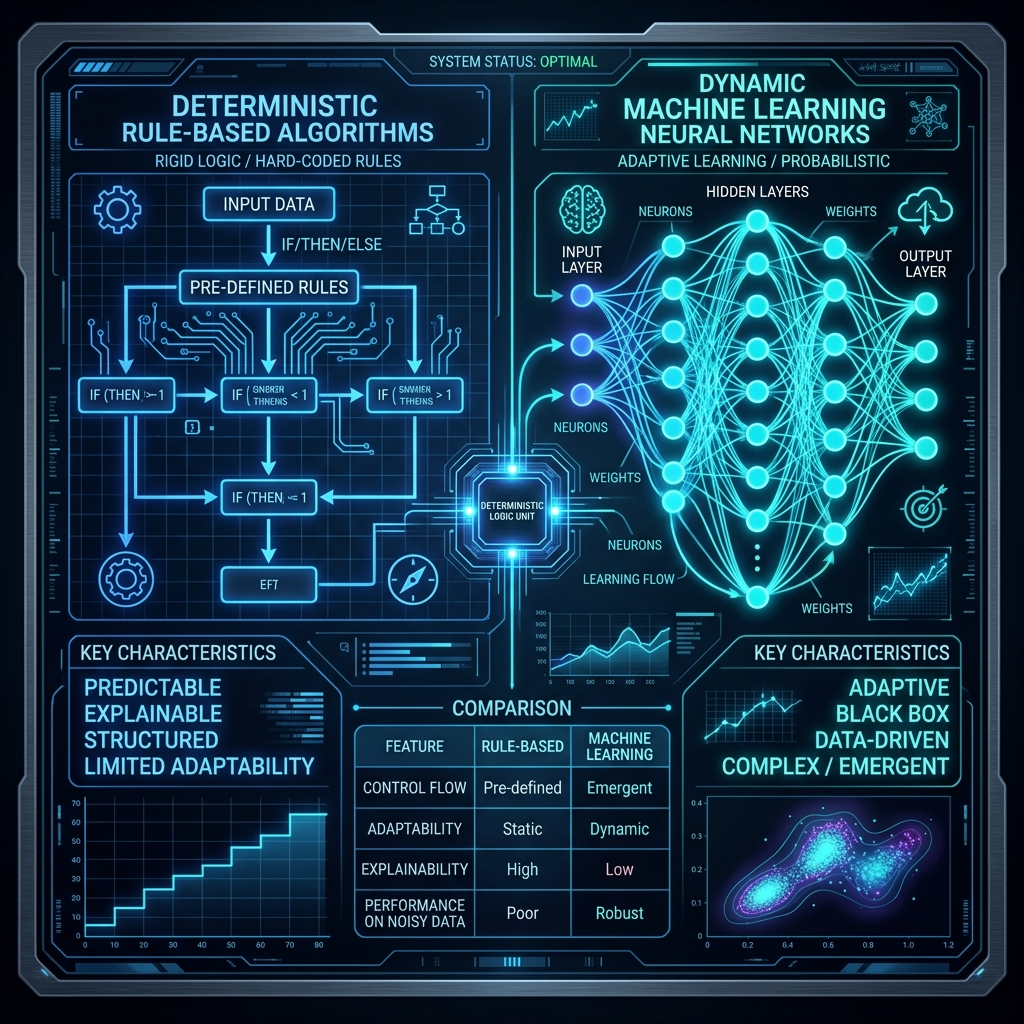
Deciding between machine learning vs. traditional software is crucial for technical founders and engineering managers. Not every business process requires a complex neural network when explicit rule-based code provides 100% deterministic accuracy at a fraction of the cost.
Machine Learning vs. Traditional Software: Architectural Breakdown
Traditional software development relies on explicit, human-coded logic (IF/THEN/ELSE). Machine learning systems, by contrast, ingest data and target labels to dynamically infer statistical patterns.
Comparison Overview
| Metric | Traditional Software | Machine Learning (ML) | | :--- | :--- | :--- | | Logic Origin | Written by human developers | Learned from training data | | Output Type | 100% Deterministic & Exact | Probabilistic with confidence score | | Maintenance | Manual code updates for new rules | Model retraining on fresh data | | Best For | Accounting, CRUD apps, payroll | Vision, speech, fraud detection, NLP |
When Traditional Software Makes Sense
- Financial Accounting: Calculating tax rates, cart totals, and payroll where absolute 100% precision is mandatory.
- Standard CRUD Applications: Managing user profiles, permissions, and basic database operations.
When Machine Learning Makes Sense
- Unstructured Data Analysis: Analyzing medical imaging, raw video feeds, or voice audio streams.
- Dynamic Personalization: E-commerce product recommendation engines that adapt to shifting user behaviors in real-time.
Topic Tags
References & External Citation Papers
Muhammad Javed
Senior Full Stack Developer (AI Domain) at Maruf Tech. Passionate about designing enterprise AI solutions, modern web apps, and machine learning infrastructure.